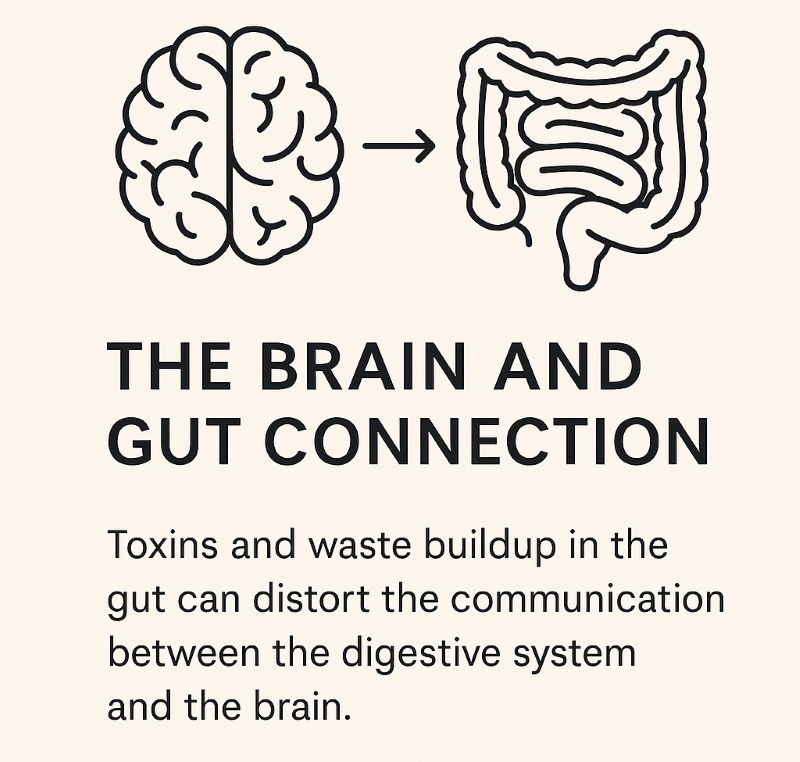
The gut contains a vast network of neurons often called the enteric nervous system. It communicates with the brain through electrical signals, hormones, and immune messengers. This creates a constant feedback loop that shapes mood, clarity, motivation, and emotional stability.
A few key dynamics:
- Neurotransmitters — A large portion of serotonin and dopamine is produced in the gut, influencing mood, drive, and emotional balance.
- Inflammation signals — When the gut is irritated or overloaded, it sends stress signals to the brain that can create anxiety, irritability, or mental fog.
- The vagus nerve — This is the main communication highway between gut and brain, carrying information about safety, nourishment, and internal balance.
⚠️ How toxins and buildup affect emotions and intentions
When the gut becomes congested — through poor digestion, low hydration, stress, or toxin accumulation — the communication between gut and brain becomes distorted. This can show up as:
- Mood swings or emotional heaviness
- Lower motivation or unclear intentions
- Difficulty focusing or making aligned decisions
- Feeling disconnected from your body or intuition
This isn’t about diagnosing anything — it’s about understanding how the body’s internal environment shapes the mind’s internal landscape. When the gut is overloaded, the brain receives mixed signals, and our emotional responses can feel out of sync with who we truly are.
🌱 Clearing the gut to clear the mind
Supporting digestion, hydration, and elimination helps restore clarity in both systems. When the gut is clean and communication is smooth, emotions stabilize, intentions sharpen, and the mind feels more aligned with the body.
This is why practices like mindful eating, hydration, movement, and stress reduction aren’t just “health habits” — they’re ways of tuning the entire mind–body system back into coherence.